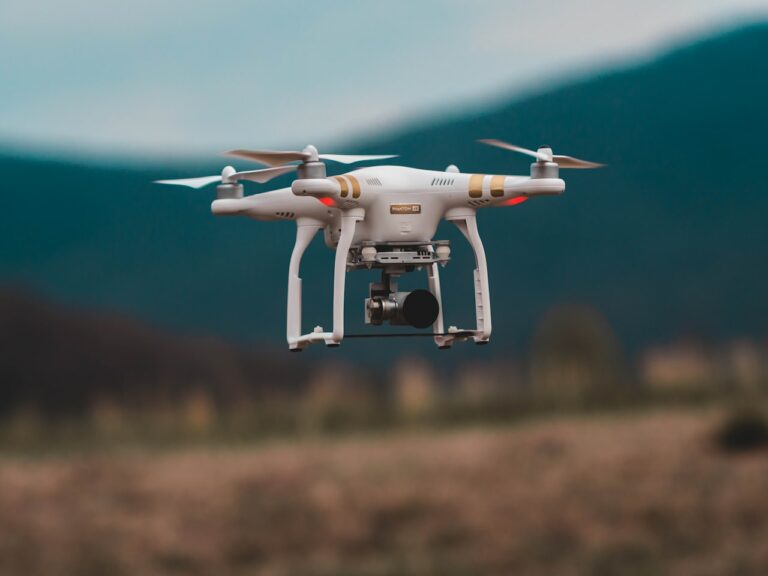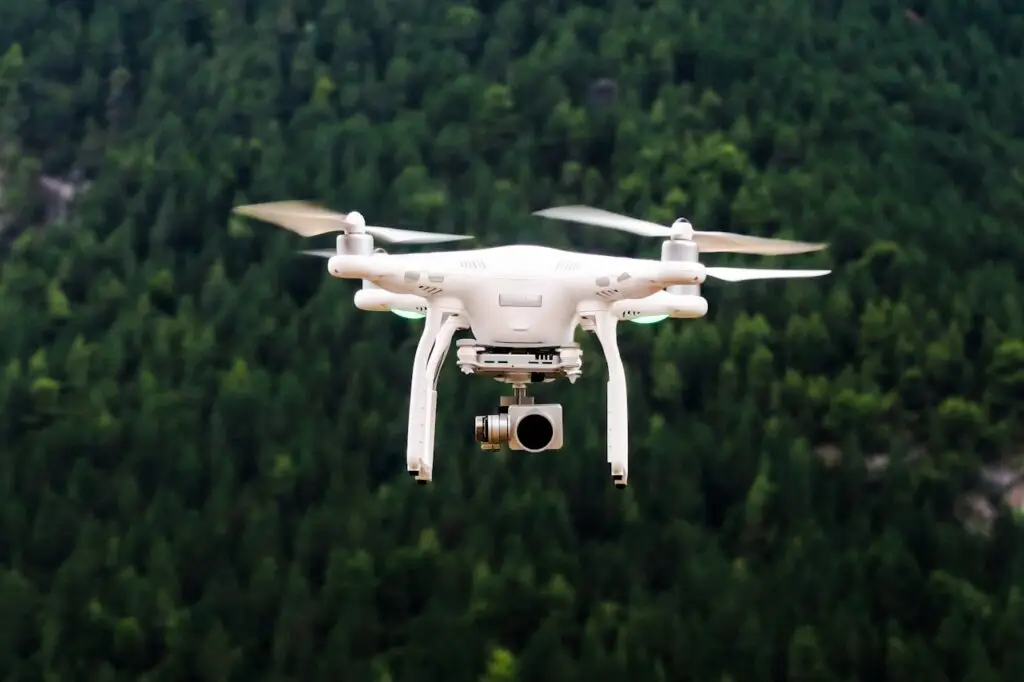
While drones are already being integrated into many sectors, from entertainment to logistics, promising new innovations are on the horizon, promising to further revolutionize the use of these flying devices.
1. Artificial Intelligence and Greater Autonomy
Artificial intelligence (AI) is playing an increasingly important role in the development of drones. The drones of the future will be equipped with more powerful artificial intelligence, enabling them to perform more complex tasks autonomously. They will be able to analyze their environment in real time, make intelligent decisions, and adapt to unforeseen situations.
Examples of applications:
- Autonomous delivery drones: Drones equipped with AI will be able to deliver packages autonomously by planning their routes, avoiding obstacles, and dropping off packages with precision.
- Autonomous inspection drones: Drones equipped with AI will be able to inspect critical infrastructure, such as bridges or wind turbines, by identifying defects and generating detailed reports.
- Autonomous Search-and-Rescue Drones: Drones equipped with AI will be able to search for missing persons in vast, hard-to-reach areas by analyzing thermal imagery and identifying signs of life.
2. Teamwork and Collaboration
The future of drones could see the emergence of drone swarms capable of working collaboratively to perform complex tasks. These drone swarms could be programmed to coordinate with one another, share information, and carry out joint actions.
Examples of applications:
- Firefighting: Swarms of drones could be used to fight forest fires by dropping water or fire retardants on the flames in a coordinated manner.
- Construction and Assembly: Swarms of drones could be used to assemble complex structures, such as bridges or buildings, by transporting materials and positioning them with precision.
- Surveillance and mapping: Swarms of drones could map large areas quickly and efficiently, collecting data simultaneously from different angles.
3. Integration with 5G and the Internet of Things (IoT)
The development of 5G technology and the Internet of Things (IoT) will open up new possibilities for drones. The drones of the future will be able to connect to high-performance 5G networks, enabling them to transmit data in real time and interact with other connected devices.
Examples of applications:
- Connected Delivery Drones: Drones connected to 5G will be able to deliver packages in real time by optimizing their routes and communicating with distribution centers.
- Connected Surveillance Drones: Drones connected to the IoT will be able to monitor critical infrastructure in real time and alert operators in the event of a problem.
- Connected Maintenance Drones: Drones connected to the IoT will be able to perform maintenance tasks on connected machines and equipment by analyzing sensor data and carrying out minor repairs.
4. Alternative Propulsion and Sustainability
The development of new propulsion technologies will make drones more efficient and sustainable. More powerful and lighter batteries, more efficient electric motors, and alternative energy sources—such as solar power or hydrogen—will enable drones to fly longer and cover greater distances.
Examples of applications:
- Long-distance delivery drones: Drones equipped with more powerful batteries and more efficient motors will be able to deliver packages over long distances, thereby reducing the use of traditional transportation.
- Surveillance Drones for Remote Areas: Solar-powered drones will be able to monitor remote and hard-to-reach areas, such as national parks or marine protected areas.
- Space Exploration Drones: Drones powered by hydrogen engines could be used to explore planets or moons, taking advantage of the high performance of this type of propulsion.