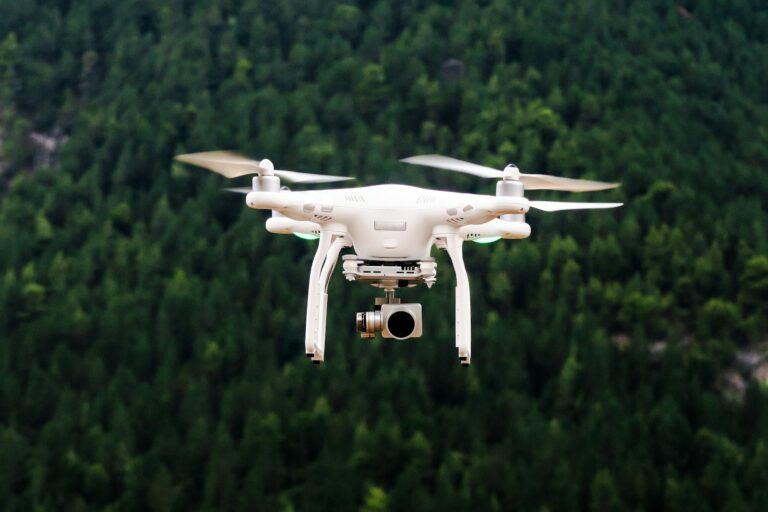
As environmental concerns grow, innovative technologies are playing a crucial role in the fight to protect nature. Among these tools, drones stand out as powerful allies for conservationists and researchers. Their ability to fly and capture unique aerial images and data offers unprecedented insights into fauna, flora and natural habitats, enabling better understanding and more effective management of fragile ecosystems.
1. Wildlife surveillance and monitoring
Drones enable scientists and rangers to monitor and track wildlife more efficiently and less invasively than traditional methods. By flying over large areas quickly and safely, drones can survey animal populations, identify critical habitats and track the movements of endangered species.
Examples of use:
- Elephant census in Africa: Drones make it possible to count elephant populations more accurately and less dangerously than ground-based censuses.
- Tracking bird migrations: Drones can track bird migrations over long distances, providing valuable information on their routes, habitats and threats.
- Anti-poaching: Drones equipped with thermal imaging cameras can be used to detect poachers and protect wildlife.
2. Monitoring and mapping natural habitats
Drones make it possible to map and monitor natural habitats with unrivalled accuracy and efficiency. By capturing high-resolution images and geospatial data, drones can help identify priority conservation areas, monitor habitat evolution and assess the impact of human activities on the environment.
Examples of use:
- Coral reef mapping: Drones can be used to map and monitor the condition of coral reefs, essential marine ecosystems threatened by climate change and pollution.
- Deforestation monitoring: Drones can be used to monitor deforestation and identify areas of illegal logging.
- Wetlands management: Drones can be used to map and monitor wetlands, which are essential ecosystems for biodiversity and climate regulation.
3. Fighting fires and natural disasters
Drones can be invaluable allies in the fight against fires and natural disasters. By providing real-time images of disaster zones, drones help firefighters and rescue workers to better assess the situation, coordinate their efforts and save lives.
Examples of use:
- Fighting forest fires: drones equipped with thermal imaging cameras can identify fire sources and guide firefighters to critical areas.
- Disaster relief: Drones can be used to assess damage caused by floods, earthquakes or hurricanes, and help rescue teams locate victims.
- Monitoring natural hazards: Drones can be used to monitor volcanoes, landslides and other natural hazards and help prevent disasters.
4. Environmental awareness and education
Drones can be powerful tools for raising public awareness of environmental issues and promoting environmental education. By capturing spectacular images and videos of nature’s beauty and fragility, drones can inspire the public to get involved in environmental protection.
Examples of use:
- Creating nature documentaries: Drones can be used to film breathtaking aerial images for nature documentaries that raise public awareness of the planet’s beauty and fragility.
- Conservation awareness campaigns: Drones can be used to create awareness campaigns to conserve nature and combat environmental threats.
- Environmental education in schools: Drones can be used in schools to teach children about the importance of protecting the environment.